
New Iberia Directory Years
The known New Iberia city directory collection is divided among local shelves, microfilm, a university bibliography, state collections, and a licensed digital viewer. No complete open run was found. Start with a year and repository rather than expecting one continuous database. The identified publications reach from the early twentieth century into the 1960 microfilm sequence, with documented gaps.
| Collection | Years | Where Held | Access |
|---|---|---|---|
| Bensel & Millard directory | 1906 | Confirmed in UL Lafayette StoryMap bibliography | Locate through library or archive |
| Polk City Directories | 1936–1937 | Confirmed in StoryMap bibliography | Repository inquiry |
| State Directory Company volume | 1940 | Bibliography and Louisiana microfilm holdings | Library or microfilm |
| Mullin-Kille and Chamber volume | 1954 | Bibliography; microfilm sequence | Library or microfilm |
| Later microfilm | 1957–1958; 1960 | St. Louis County Library Louisiana holdings | Ask holding library |
| Digitized New Iberia collection | 1957 | Licensed collection page | Search page; image access limited |
The catalog notes gaps for 1941–1953, 1955–1956, and 1959 within its reel runs. Those are gaps in the described holdings, not proof that no directory was issued. Confirm another library or the State Library before marking a year absent.
New Iberia City Directory Library
Parkview Library is the strongest local entry point for New Iberia city directories. Its local genealogy and history collection includes current and historical Iberia Parish telephone books, city directories, and newspaper microfilm. The branch is at 500 Grand Pré Boulevard, New Iberia, and its research phone is 337-364-7480. A focused Genealogy Information Sheet can be brought, mailed, or emailed to parkviewlibrary@iberialibrary.org.
The Iberia Parish Library genealogy page also routes readers to FamilySearch, HeritageQuest, HeritageHub, local newspaper databases, African American heritage material, and National Archives sources.
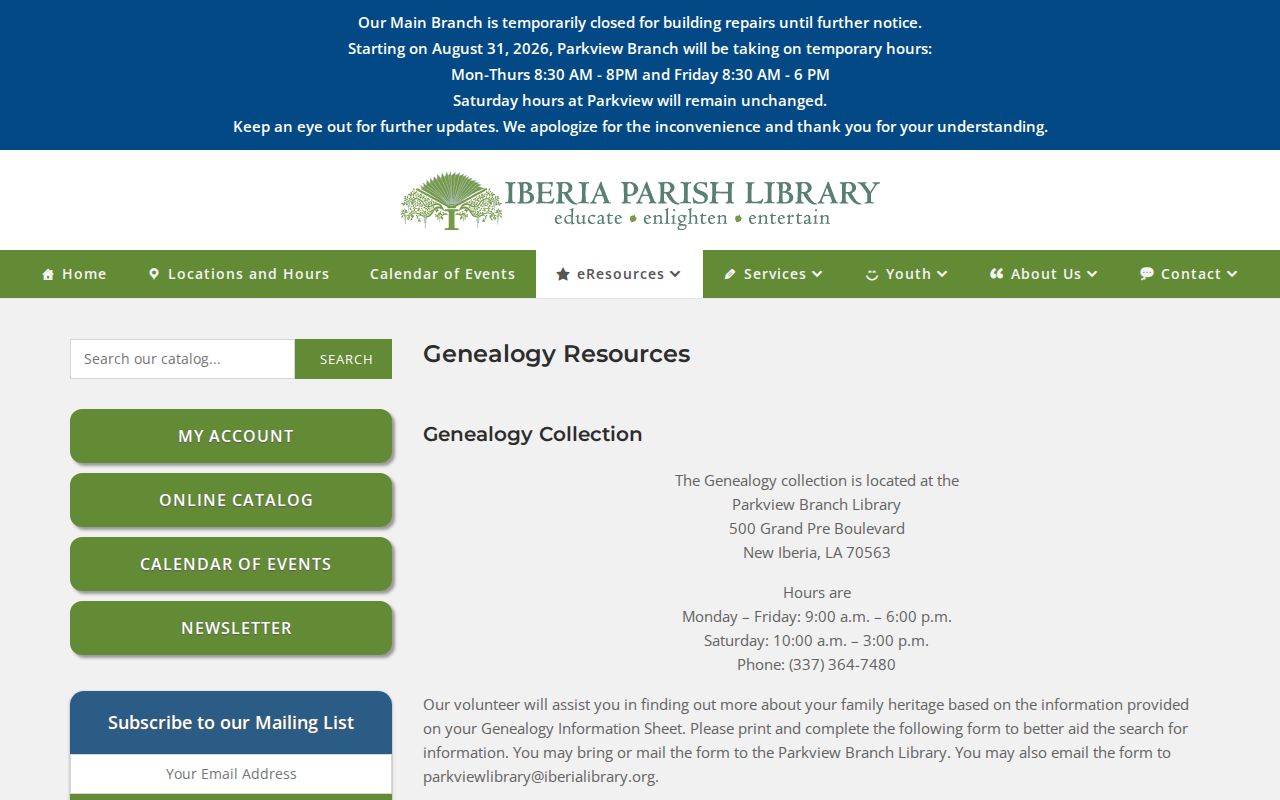
The library screen is the practical fallback when a directory image is missing online, since staff can check shelves, microfilm, and licensed databases.
New Iberia Directory Timeline
The city directory years sit inside a broader record history. That context tells a researcher when to favor parish books, annual directories, newspapers, or modern portals.
Bensel & Millard published a New Iberia and Jeanerette directory.
Polk's 1936–37 volume and the State Directory Company's 1940 edition supply named city targets.
Mullin-Kille, the 1957 collection, and microfilm holdings form a mid-century sequence with missing years.
Library, archive, microfilm, bibliography, and licensed digital access remain split across repositories.
Iberia Parish formed in 1868, so earlier property or court work may belong in older state, parish, church, or archival runs rather than a modern city index.
Search the 1957 New Iberia Directory
The digitized 1957 New Iberia city directory collection page displays 682 records and search fields for first, middle, and last name, location, keywords, and exact match. The unattended viewer did not expose a verifiable page image. Use the index as a lead, then confirm the image through an authorized viewer or a library holding before quoting an entry.
The 1957 collection search page shows the available search design and its access boundary.
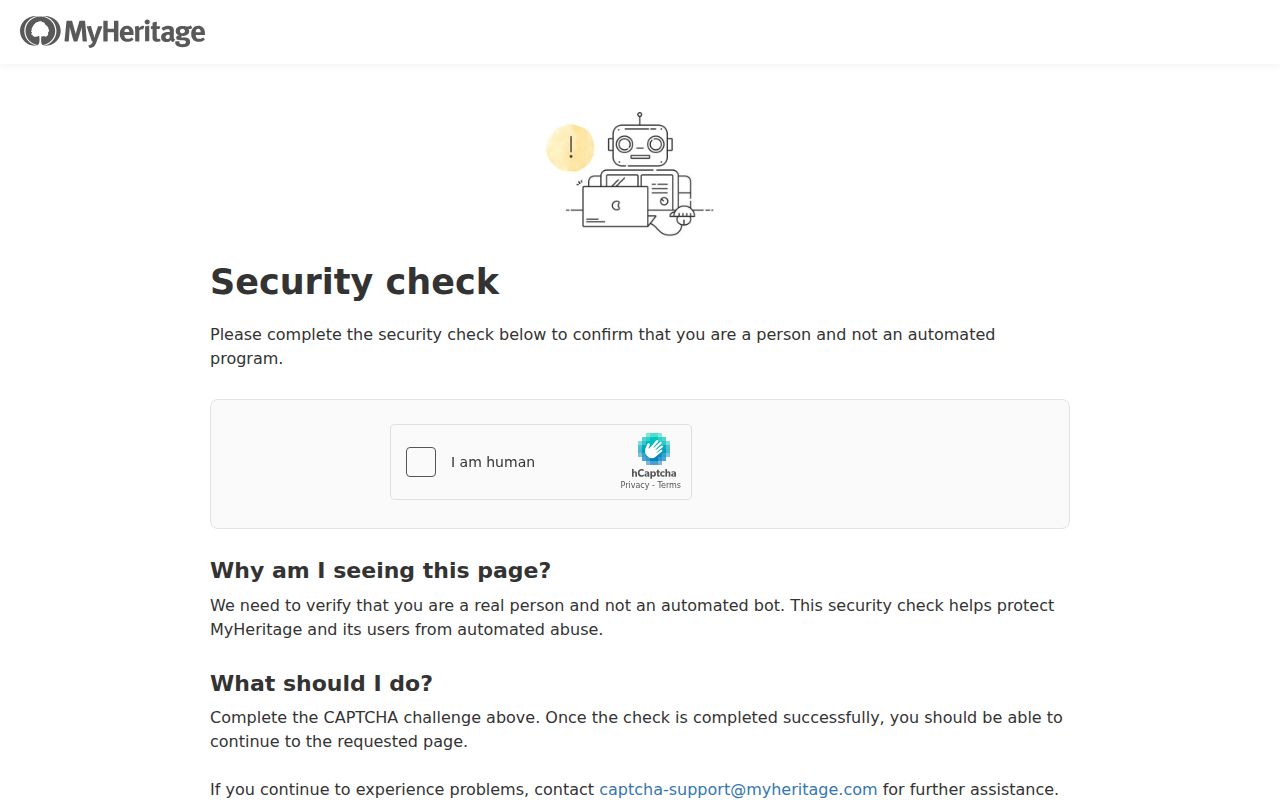
The screenshot documents the collection-level fields, but it does not support a claim about any named person, street, or occupation without viewing the original page.
Read New Iberia Directory Entries
A city directory entry is a compact, dated label. Transcribe only what the image shows, including punctuation and abbreviations. The 1957 page-level image was not available during research, so the fields below are an inventory to verify, not a quotation from a New Iberia resident.
| Name | Copy exact initials, surname spelling, and any spouse or widow notation shown. |
|---|---|
| Address | Record the house number, street, unit, and whether it is a residence or business entry. |
| Role | Transcribe the stated occupation, organization, business, or other label. |
| Marks | Check the volume's own key for owner, renter, boarder, or residence abbreviations. |
| Citation | Keep title, publication year, page, image identifier, and repository. |
- Criss-cross directory
- A section arranged by street and house number, useful when the address is known.
- Householder index
- An address-based list whose label and scope must be checked in that volume.
- Abbreviation key
- The publisher's legend for shortened names, roles, addresses, and status marks.
New Iberia Directory Newspapers
Newspapers help when a city directory year is missing. Iberia Parish Library identifies New Iberia Enterprise microfilm for 1885–1947, Weekly Iberian for 1894–1946, and Daily Iberian for 1893–2017 with some missing months. Chronicling America also digitizes the Weekly Iberian run from 1894 through 1946. Search an address, surname variants, a business name, and nearby cross streets.
An obituary or public notice may give relatives, a cemetery, an address, or a property event. It remains a dated secondary source. Save the publication, issue date, page or image identifier, and exact wording. HeritageHub and library newspaper databases add other access channels when open web searching fails.
Map New Iberia Directory Addresses
The Library of Congress Sanborn collection covers New Iberia map editions from 1885 through 1952, including 1892, 1895, 1899, 1903, 1904, 1909, 1925, 1931, 1948, and 1952. A sheet can show a street label, building footprint, material, use, and adjacent structure. It cannot name every occupant. Pair it with a city directory entry, deed, newspaper item, or permit.
The I.A./Carroll Martin Photo Collection adds 24,956 prints and negatives dating from 1895–1980. Its captions can help identify a building, street, business sign, event, or public scene. Bayou Teche Museum and Iberia Cultural Resources provide more routes for photographs, artifacts, and oral history when formal files do not explain a place.
West End City Directory Context
A city directory can flatten a neighborhood into names and numbers. For West End and Hopkins Street, the UL Lafayette Queen City StoryMap, Iberia African American Historical Society, and Southern Mutual Help materials add Black community history, businesses, institutions, oral histories, and cemetery leads. Those sources should provide context separately from any person-specific directory claim.
IAAHS identifies journals, oral histories, historically significant cemeteries, and a member database of Black Civil War veterans with New Iberia ties. Its 2019 journal is available through LSU Hill Library and Iberia Library branches. Use the public research route and do not treat a members' resource as an open roster.
New Iberia Directory Archives
The State Library of Louisiana keeps historical city directories and telephone books with maps, newspapers, census, military, and parish microfilm collections. The Louisiana State Archives catalog and subject guides add historical records, maps, newspapers, microfilm, and older vital indexes. These statewide repositories are essential when the local shelf lacks a year.
The Louisiana State Archives subject guides show the broader research route.
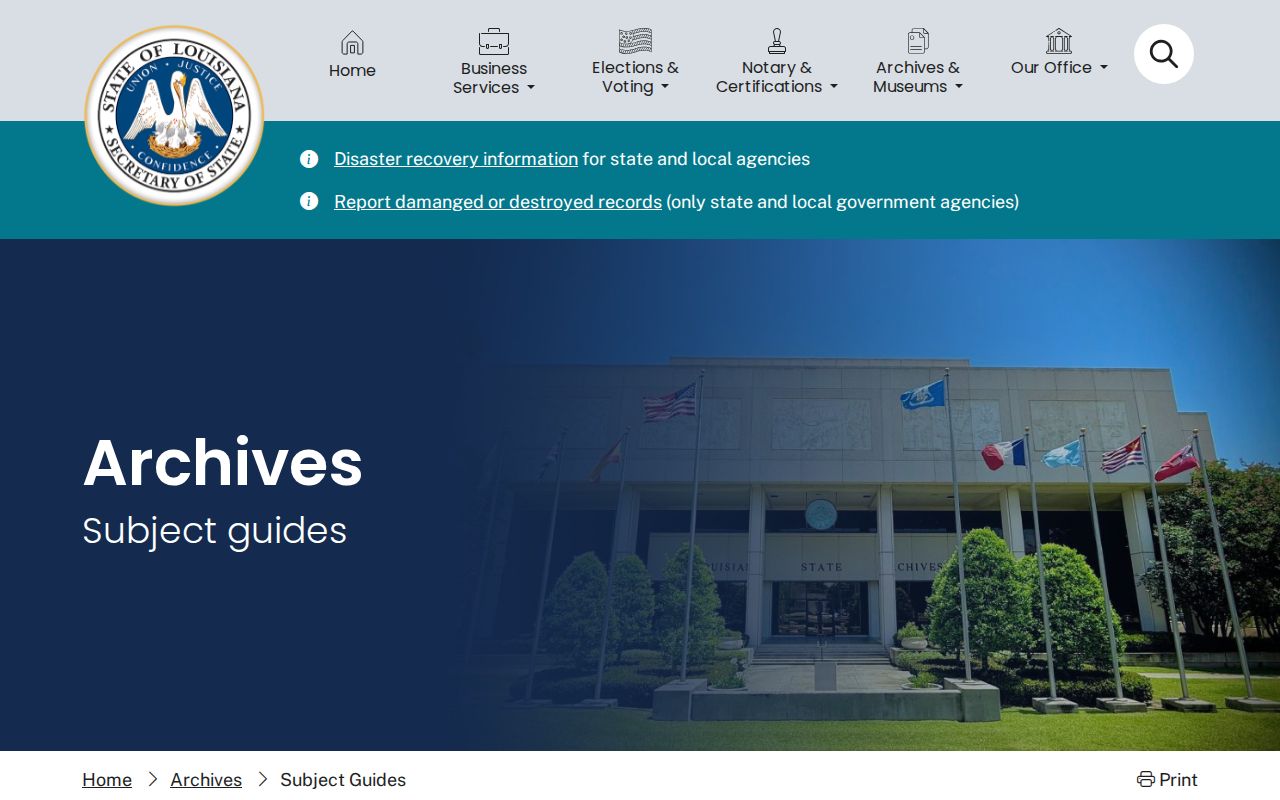
The guides help move a directory clue into census, newspaper, land, map, or vital-record research without implying that every item is digitized.
Trace New Iberia City Directories
Annual city directories can bridge the long interval between federal census releases. Begin with a verified name or address, follow each dated appearance, then pair the sequence with census, obituary, cemetery, deed, and newspaper sources. A shared surname or address does not establish a family tie by itself.
- Choose one directory year and search the exact surname, initials, first-name variants, married or widow forms, and likely misspellings.
- Copy the complete entry and citation. Label it as a directory entry at an address in that publication year.
- Move forward and backward through available years. Note address changes, gaps, changed initials, and business or organization labels.
- Use a criss-cross section, when present, to inspect the street and adjacent house numbers. Do not infer kinship from proximity.
- Pair directory years with released census schedules and close the trail with an obituary, cemetery custodian, church record, deed, or newspaper notice.
A person who vanishes from the next city directory may have moved, died, changed name, become unlisted, or fallen into a missing year. Test each possibility. The modern address-keyed record chain belongs in the New Iberia street directory, while this historical method stays anchored to each publication date.