
New Iberia Previous Residents Sources
Previous residents appear in a chain of dated records, not in one complete list. The current Iberia Parish Assessor search supplies a parcel number, physical address, mailing address, legal description, deed rows, and condensed ownership history. The Clerk's land index carries the recorded trail farther back. Directories and newspapers can then add household clues that a transfer record does not contain.
| Source | Years It Covers | Where Held | What It Shows |
|---|---|---|---|
| Conveyance and plat index | 1868 to present | Iberia Clerk and eClerksLA | Instruments, parties, book/page, and references |
| Mortgage index | 1959 to present | Iberia Clerk and eClerksLA | Mortgages and cancellations |
| New Iberia directories | 1906, 1936-37, 1940, 1954, 1957-58, and 1960, with gaps | Libraries and authorized viewers | Address-to-name and name-to-address clues |
| Local newspapers | Runs from 1885 through 2017, with gaps | Library databases, microfilm, and Chronicling America | Notices, obituaries, sales, and civic events |
| Sanborn maps | 1885 to 1952 series | Library of Congress and StoryMap references | Street labels, footprints, and historic use |
| Assessor card | Current card with historic rows | Iberia Parish Assessor | Assessment, owner, address roles, and condensed history |
| Inspection files | Range not stated | City or parish by request | Construction, demolition, applicant, and status |
For a recent transfer, start with the assessor and Clerk. For a mid-century household, use a directory year, then check a nearby newspaper date and the deed chain. For a building from the late nineteenth or early twentieth century, pair recorded instruments with Sanborn sheets and archive material. A blank year is an open interval, not proof that no one lived at the address.
New Iberia Deed Index Trail
The eClerksLA land-record search accepts grantor and grantee names, date ranges, instrument numbers, descriptions, and partial names. Results can be narrowed by book type, document type, cancellation, and amount. A detail can show the instrument number, record and document dates, book and page, amount, references, and parties. Search each role separately because one person can be both grantor and grantee in a partition, donation, correction, or related filing.
The Clerk lists conveyance and plat coverage from 1868 and mortgage coverage from 1959. Index access, document images, copies, and certification do not all have the same cost. The Iberia Clerk subscription page explains current and historical routes when an image is not visible online.
The statewide land-search screen shown below is the starting point for this backward name chain.
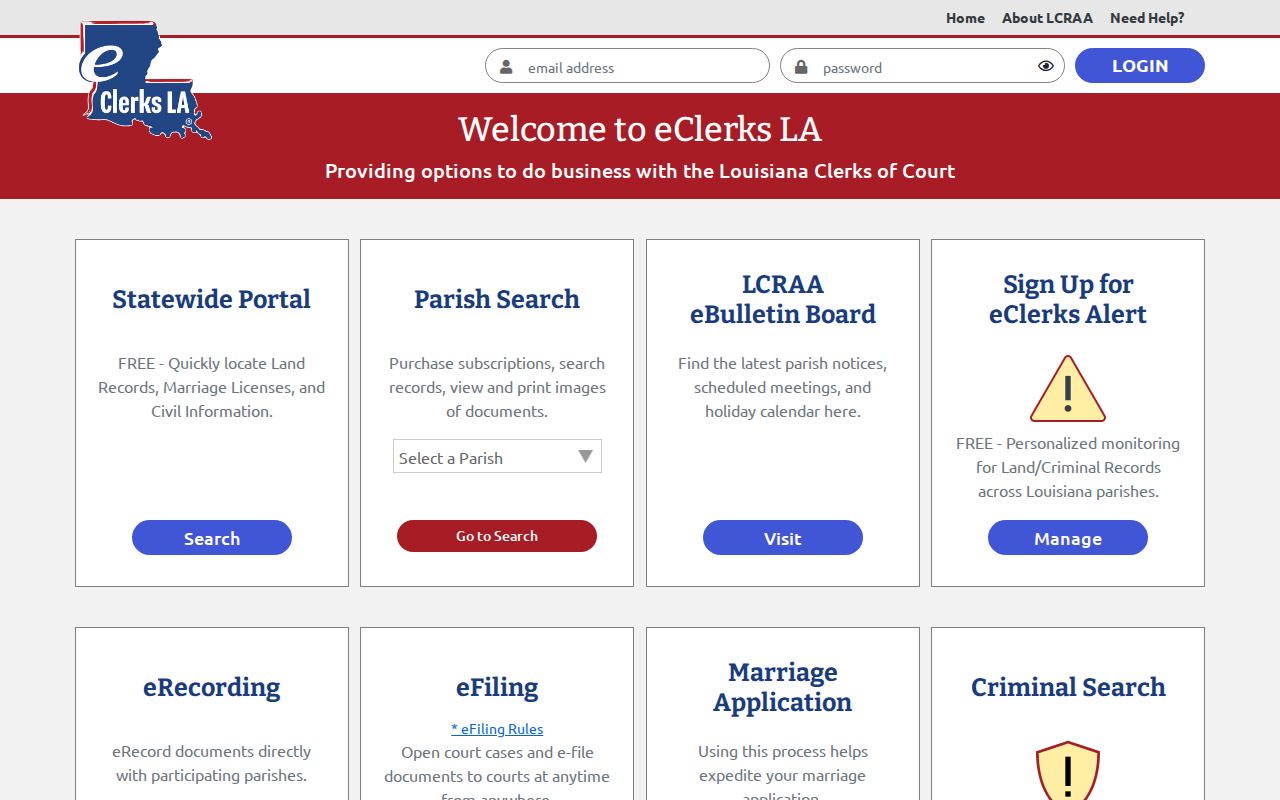
Its index fields help tie each name to a dated instrument instead of treating a same-name hit as a former occupant.
The Clerk's historical coverage page also identifies the older search routes available for Iberia Parish records.
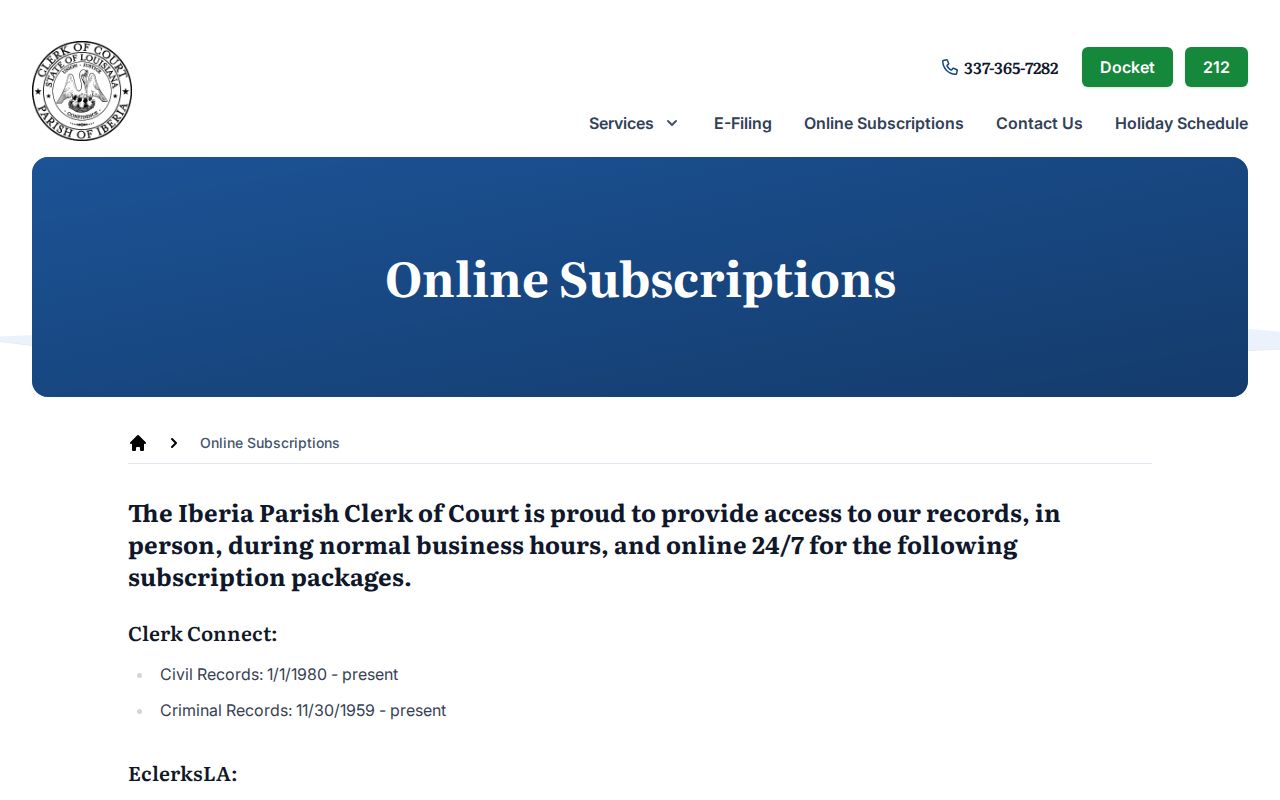
That coverage statement helps mark the point where online searching must give way to Clerk assistance, books, or copies.
Trace Iberia Parish Past Owners
A backward deed search begins with today's parcel, not with a remembered name. Copy the exact legal description and all visible deed rows. Then verify every transfer in the Clerk's index. Tax sales, sheriff's sales, donations, partitions, redemptions, and affidavits of correction can interrupt a simple sale-to-sale pattern. Each instrument needs its own date, parties, and references.
- Save the parcel number, current owner, address roles, and legal description from the assessor card.
- Find that owner's acquisition instrument in eClerksLA and read the document type and parties.
- Take the seller's name and search that person as grantee near the earlier acquisition date.
- Repeat while recording instrument, book/page, amount, legal description, image status, and any conflict.
- Ask the Clerk for an unscanned volume, map, reference, or copy when the online chain ends.
- Grantor and grantee
- The grantor transfers an interest. The grantee receives it.
- Chain of title
- The dated sequence of recorded transfers affecting one property.
- Legal description
- The lot, block, subdivision, or land description that can remain stable when a street label changes.
New Iberia Previous Residents Clues
The Angie Street sample shows why ownership history can bend instead of moving in a straight line. Its assessor card lists a physical address at 1206 Angie Street and a mailing address at 1217 Angie Street. Those are distinct source fields. The visible rows include tax sales, a redemption, a tax deed, a cash sale, and an affidavit of correction, with ownership history reaching back to 1953.
Use the second sample ownership card as a model for reading a long run of dated rows.
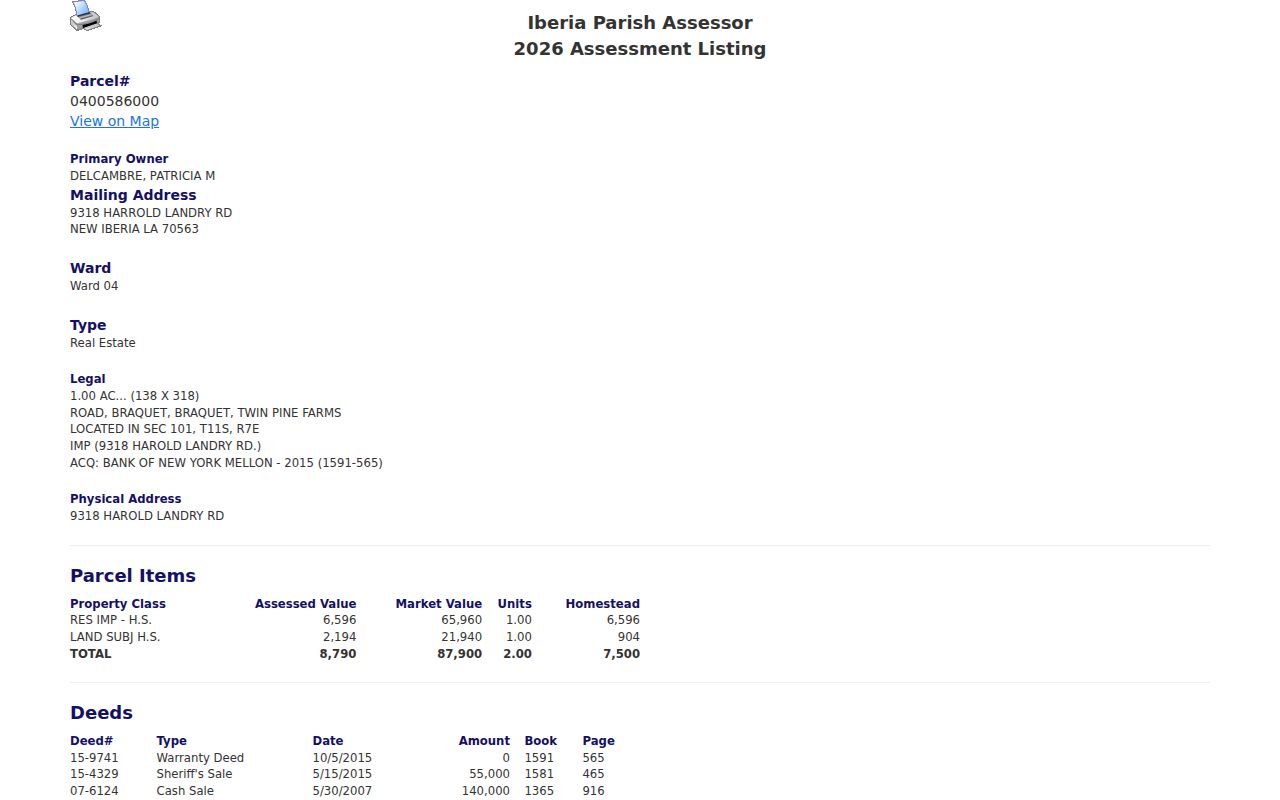
A condensed assessor row is a lead. The matching deed decides what legal event occurred, while a directory or obituary is needed before calling a named party one of the previous residents.
Keep roles separate. An owner, taxpayer, grantor, grantee, permit applicant, mailing contact, and directory entry may identify different people.
Map New Iberia Previous Residents
Sanborn fire-insurance sheets cover New Iberia in a series from 1885 through 1952. They can show a street label, cross street, lot setting, building footprint, and historic use. They do not name a household. Compare the map date and sheet number with the parcel's current shape and a recorded plat before deciding that an old footprint belongs to the modern address.
The 1899 Main Street fire is a useful records question, not proof of a lost deed. The UL Lafayette Queen City StoryMap describes the event. If an address trail breaks near that date, ask the Library, Archives, or Clerk which volumes, maps, newspapers, or microfilm survive. Lack of a web image does not establish that the record was destroyed.
Note: A Sanborn use label dates a structure's context, but only a separate named source can place a person there.
When New Iberia Resident Addresses Shift
No official citywide old-to-new street table was found. That gap matters when an early directory number disappears. Preserve the source spelling, directional, suffix, cross street, and legal description. Then compare Sanborn street labels, directory neighbors, the recorded plat, and the modern parcel. A right-of-way file, planning record, ordinance, or E-911 response may explain a renamed road or later number.
For a missing change record, ask the correct custodian with both address forms, the parcel number, an approximate date, and the record sought. E-911 handles parish addressing questions. City offices keep incorporated New Iberia planning, inspection, compliance, and right-of-way files, while parish offices cover their own jurisdiction. This fallback is essential because no online municipal permit index or public E-911 change table was located.
New Iberia Previous Resident Records
Deeds date transfers, but building files may explain why the property changed. New Iberia lists permits for construction, remodeling, additions, demolition, moving a house, mobile homes, fences, signs, trade work, and certificates of occupancy. Compliance files can add condemnation, abandoned-house, and right-of-way matters. These records may name an owner, applicant, or contractor, yet none of those roles alone proves residence.
The Iberia Clerk land and mortgage page shows the official route for recorded property material.
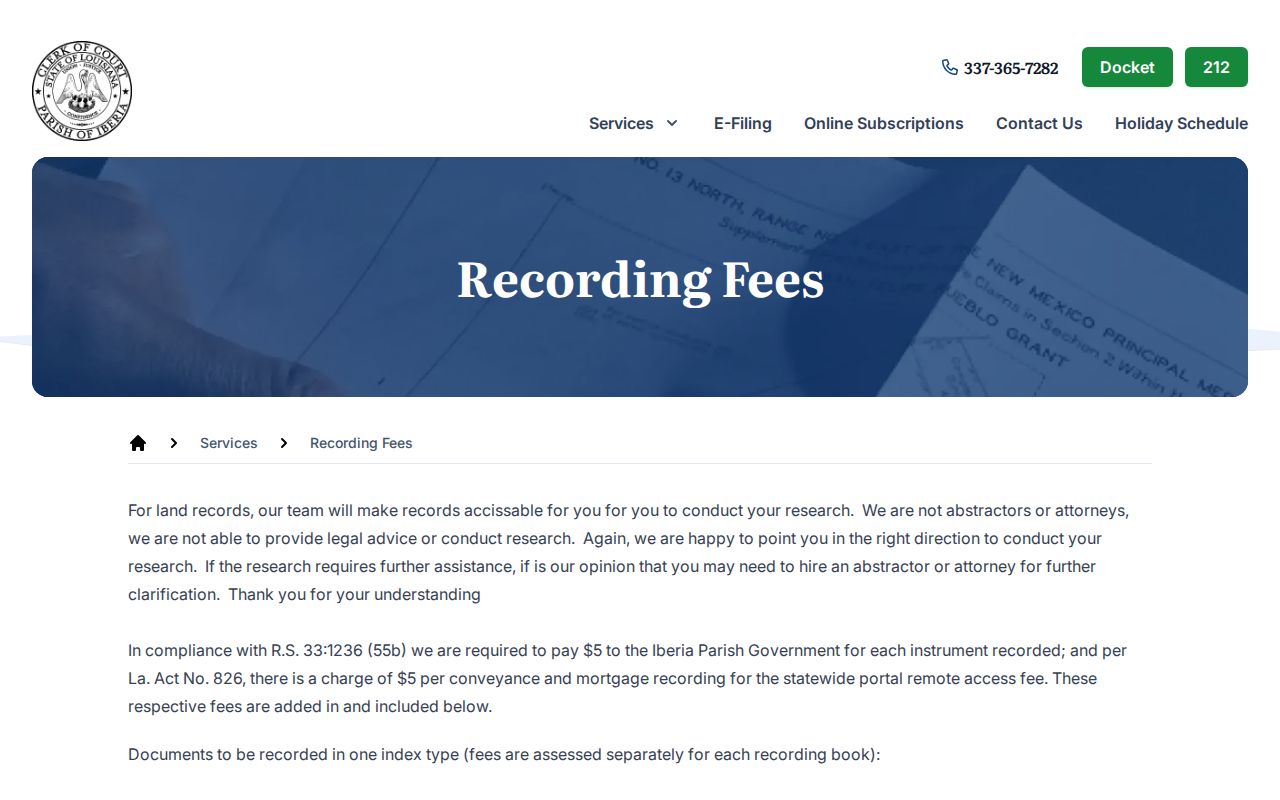
Use its record categories to distinguish an indexed transfer from a city permit or assessor summary.
New Iberia Past Household Trail
Owners are only one part of previous-resident research. Search the address and street section in each available directory year. Record the exact spelling, page, house number, and label attached to the name. Compare nearby entries and cross streets. The collections and publishers are covered on the New Iberia city directory page, while the address trail here uses each volume as one dated checkpoint.
Build a simple flow: directory entry, nearby census schedule, later directory, newspaper notice, obituary, then probate or cemetery lead. The Weekly Iberian runs from 1894 to 1946 online and in local holdings. Library microfilm includes long runs of the New Iberia Enterprise and Daily Iberian, though gaps exist. An obituary can supply family links or a later address, but it remains a secondary source until matched to the correct person.
The Louisiana State Archives catalog is the fallback for older maps, newspapers, microfilm, and vital indexes.
Archive catalog terms can close a gap after the online land index or local directory run ends.
Lawful use. Trace previous residents for house history, genealogy, estates, or personal research. Never use an address trail to track, harass, or harm a living person.